Mapping the AI Landscape: Beyond Generative AI
· 7 min read

A comprehensive guide for tech leaders navigating the AI ecosystem
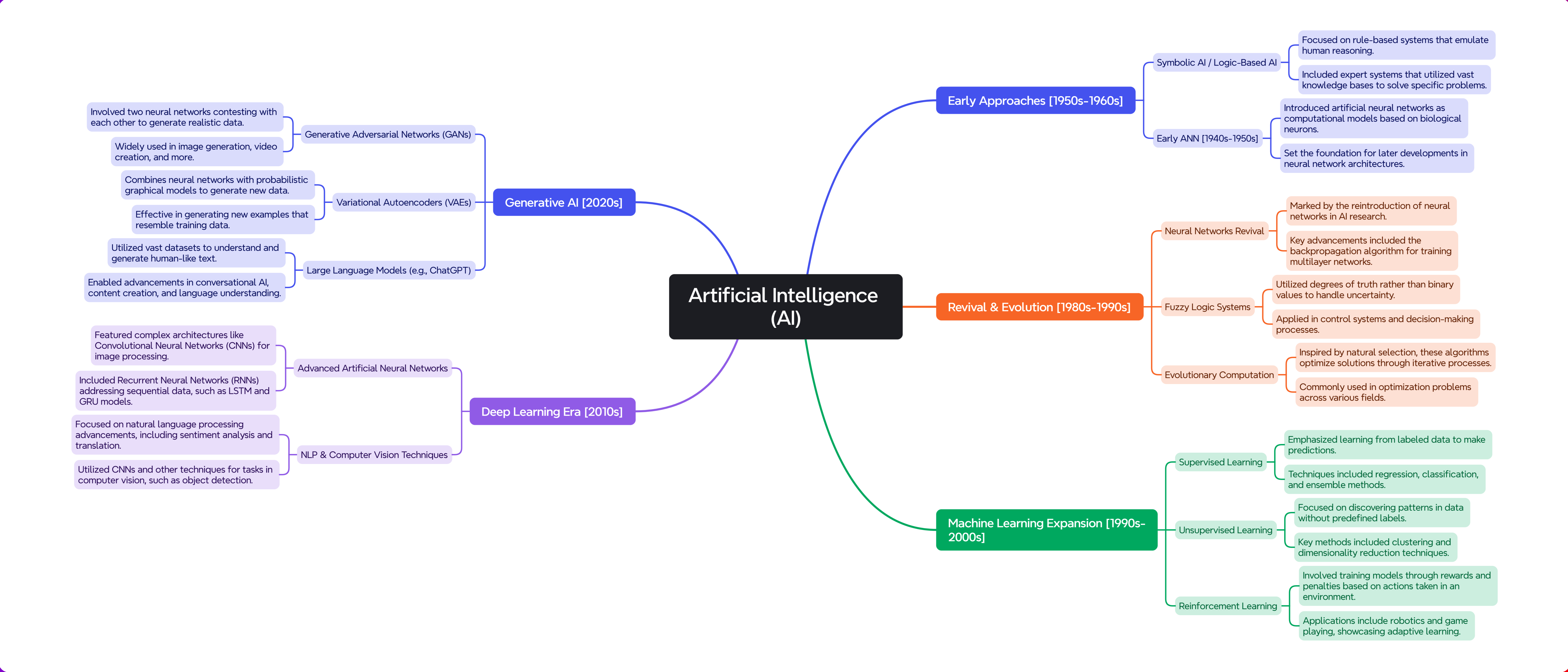 Figure: A comprehensive overview of AI evolution from early approaches to modern generative and predictive systems
A comprehensive guide for tech leaders navigating the AI ecosystem
Figure: A comprehensive overview of AI evolution from early approaches to modern generative and predictive systems
Picture this: your car navigates rush-hour traffic autonomously, your medical scan receives near-instant AI analysis, and your favourite tune is co-written by an algorithm. This isn't science fiction—it's our emerging reality. Artificial intelligence is transforming society at breakneck speed, offering extraordinary promise while raising legitimate concerns about job displacement and human purpose.
In our AI evolution series, we've journeyed from symbolic systems and early neural networks through machine learning and deep learning. Now we arrive at generative AI—a true paradigm shift where machines don't just analyze data; they create original content. This transformation is redefining our relationship with technology across industries, creativity, and human-machine collaboration.
Generative AI is a powerful tool for transforming ideas into reality. The key to unlocking its full potential lies in crafting effective prompts. In this guide, we'll explore how to create prompts that maximize the capabilities of Generative AI, using a practical example: building a mobile-first responsive website.
In our AI evolution series, we've journeyed from symbolic systems and early neural networks to the rise of machine learning. Now, we dive into deep learning—the technology powering today's most astonishing breakthroughs, from image recognition to language generation.
Communication is an art form, and nowhere is this more apparent than when interacting with AI assistants like Claude. Through my recent experimentation and conversations with Claude, I've discovered that how you structure your prompts dramatically impacts the quality and relevance of the responses you receive. In this guide, I'll share practical insights on effectively communicating with Claude to get the best possible results.
In our journey through AI's evolution, we've explored its symbolic beginnings and neural networks revival. Now, we arrive at the Machine Learning Revolution—which has redefined what machines can learn, perceive, and achieve.
Building on the AI Evolution Overview's look at AI's early days, let's explore a turning point: the neural network resurgence. In the 1980s and 90s, these systems broke free from symbolic AI's rigid rules, redefining how machines learn and engage with the world. For me, this era hit home—my Master's research on artificial neural networks (ANNs) began here, sparking a lifelong fascination.
During my Master's research on artificial neural networks (ANNs) thirty years ago, I first immersed myself in AI—a field where the future was rapidly unfolding. Now, returning after a long hiatus, I'm inspired by the groundbreaking advances and profound social impact of AI. Motivated by these breakthroughs, I've decided to share this series to explore AI's evolution—from its early theoretical roots to today's transformative innovations.